
Plant-Microsymbiont Interaction - Stefanie Wienkoop Group
Contact
-
Room: 3.046
Djerassiplatz 1 (UBB)
1030 Vienna, Austria
+43-1-4277-76560
stefanie.wienkoop(at)univie.ac.at
news... Lena Fragner
Research Focus
Development and integration of -omics techniques, including mass spectrometry based metabolomics and proteomics with phenotyping, allows Wienkoop to gain large insights into plant-microbe interactions and to resolve the complexity of metabolic communication and adjustment processes of plants and microbes.
Wienkoop`s team investigates the metabolic exchange between plants and microbes and the influence microsymbionts have on the plant`s immune system and how this induces stress resistance upon environmental perturbations such as drought or pathogen attack. (Video available on Homepage of Stefanie Wienkoop)
Current PhD Students
Julian Preiner, Dania Randi, Carlos Perez-Rizquez, Yovita Astuti-Djohan
Current Masters
Katarina Frankova, Can Stark, Marinela Manic


Topics
Unraveling the proteome of the symbiosome (peribacteroid) membrane (SM)
Legumes establish symbiotic interactions with soil microbes. Rhizobia symbiosis for instance, leads to the formation of root nodules, the organ where the mutualistic metabolic exchange between plant and bacteroids is taking place. In nodules, the SM is the interface for the metabolic exchange between plant and bacteroids. Several proteins have been identified by Wienkoop & Saalbach (2003). Wienkoop`s team and coworker recently revealed the important function of the sulfate transporter (SST1). They demonstrated that the bacteroids take up 20‐fold more sulfate than the nodule host cells. Furthermore, they showed that nitrogenase biosyn -thesis relies on high levels of imported sulfate from the plant.
Interaction with rhizobia leads to increased drought tolerance of plants
It is commonly accepted that plant species differ in their ability to tolerate abiotic stresses such as drought. This feature is used in plant breeding to select for those plants that have the genetic background best adapted to the environmental constrains. However, not much is known about the effects, soil microbes have on theplants immune system. Some symbiotic microbes can increase the stress tolerance of the plants by increasing metabolic resistance. Wienkoop`s team found that interaction with rhizobia leads to decelerated leaf senescence of legumes during drought along accelerated recovery upon re-watering. To tackle all the molecular mechanisms, responsible for this “symbiont induced stay green effect” (SISG) is one major focus of Wienkoop`s research group.
Microbial symbionts improve the plant`s immune response to pathogen attack
The team also investigates the microbial impact on the plant`s immune response to pathogen attack. Symbiosis can enhance e.g. phytoalexin production for increased resistance of the plants against biotic stress. This can lead to improved seed protection and quality.
Projects
-
MENTOR - Molecular Mechanisms to Improve Plant Resilience
PhD program DocFunds "MAINTAIN" funded by the Austrian Science Fund (FWF) and the University of Vienna start in 2022 (-2025).

-
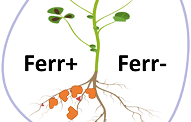
Symbioprotein Ferritin (SymProFerr)
Funded by the Austrian Science Fund (FWF) from 2021-2024 [P 33930]
-
Metabolic interplay and novel interactions (MAINTAIN)
PhD program DocFunds Microbial symbioses in dynamic environments: Metabolic interplay and novel interactions (MAINTAIN) funded by the Austrian Science Fund (FWF) and the University of Vienna started in 2020.
"Root-microbiome of halophytic plants" subproject page
-
Microbial Nitrogen Cycling
From Single Cells to Ecosystems FWF funded doctoral program (DK plus).
PI of Subproject: Effects of nutrients on N-fixation of Lotus spp. and Rhizobium strains
-
Tripartite symbiosis
Tripartite symbiosis formed by Pisum sativum, rhizobia and mycorrhiza: Implications for the symbionts, the host plant and the pathogenic fungi,
FWF [P 24870-B22]
"Tripartite symbios" project page
-
Multilevel analysis towards drought tolerance in Legumes
FWF [P23441-B20]
“Drought tolerance in Legumes” project page